

Katsushika Oi
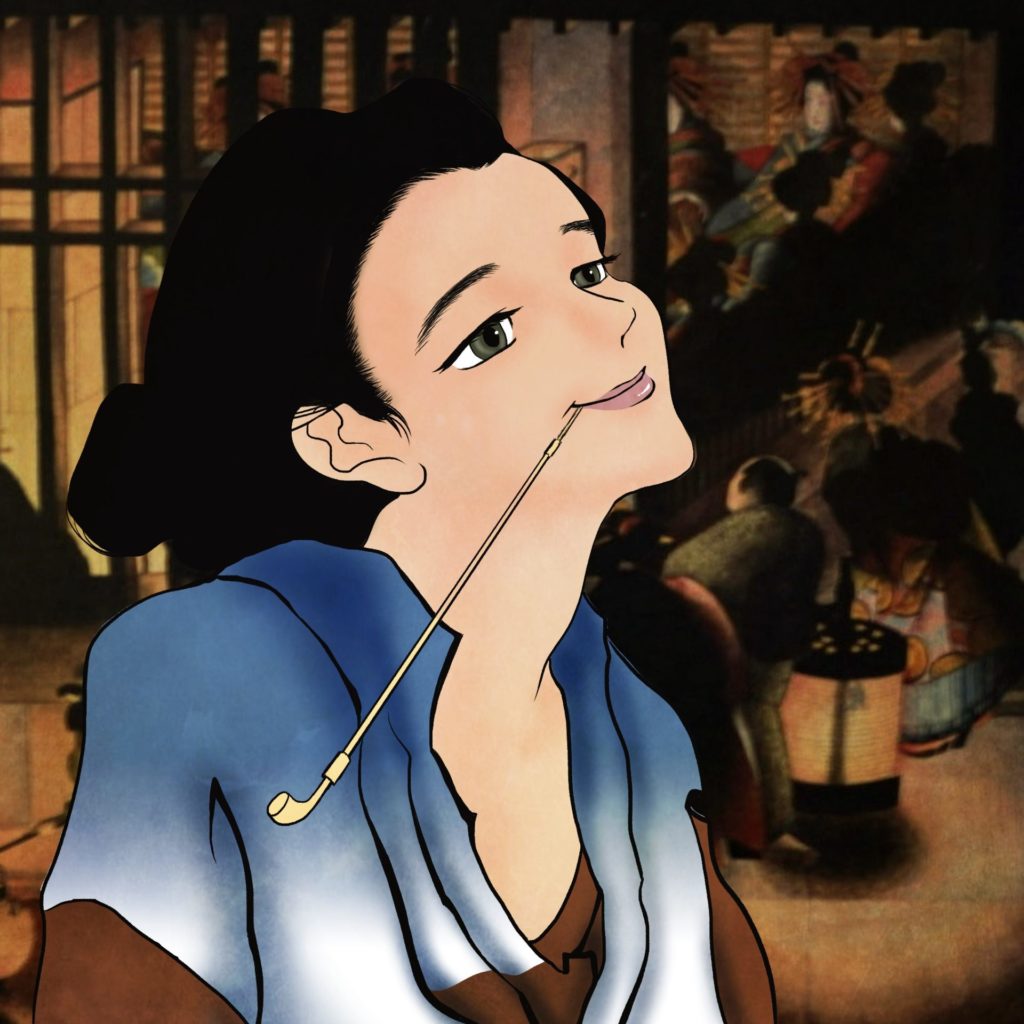
葛飾 応為
I exceed my father.
I love painting and sake.
(1800~1867?)
She is the daughter of Katsushika Hokusai. She was a highly qualified painter and supported the work of her father. She did not have her own home and she lived freely. After Hokusai’s death, her whereabouts are unclear. Judging from the sign of her painting, there are some works that she allegedly painted. However, researchers have suggested that Hokusai’s work may be mixed with her work.
These are three works that I especially like. The photo is a part of the work.

Her expression of light is mellow and graceful. On the other hand, the black straight line is powerful and stylish. In this figure, there is a hidden sign of Oi. That kind of casualness is cool.
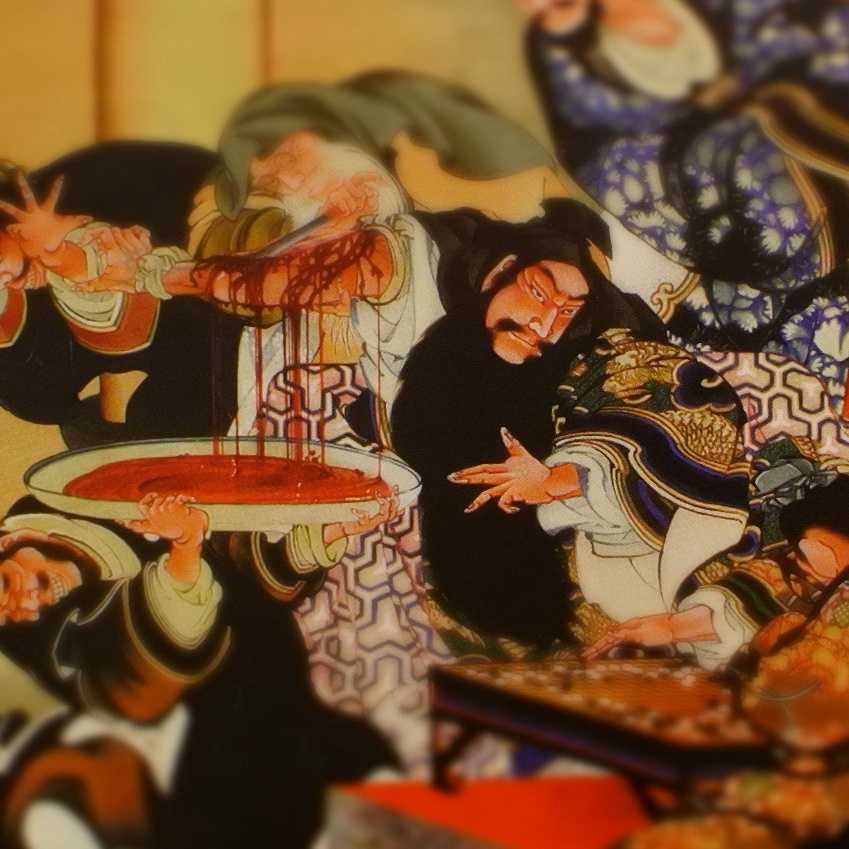
This is a scene from the Three Kingdoms. A doctor is treating Guan Yu who was shot on his right arm. Guan Yu is playing go dignifiedly. This scene seems to represent the brave personality of Oi. I feel refreshed to see.
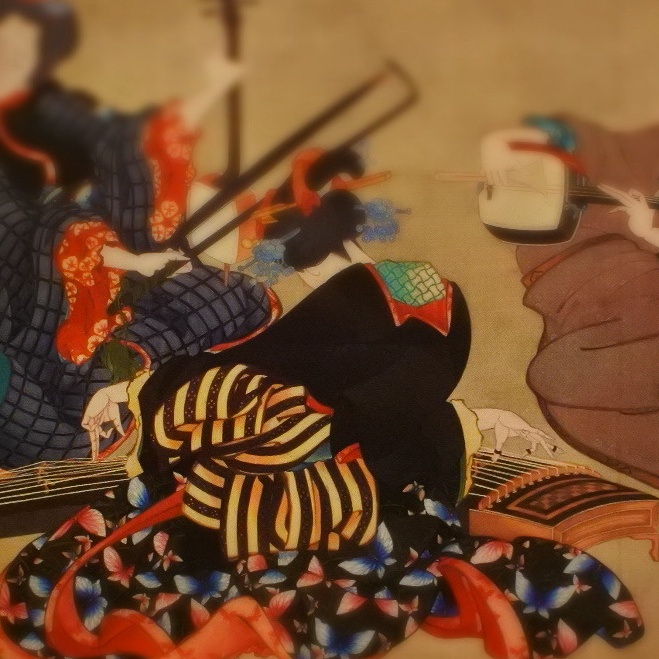
The title means an ensemble of kin, shamisen, and kokyu. The woman drawn by Oui is very gorgeous. The colors and patterns of their kimono make the screen more attractive. It can be seen that Oui is calmly observing her female sensibility.
Tsuyuki Iitsu’s “Hokusai Karitaku no zu” depicts Oui. She holds a kiseru, breaks her posture and looks at Hokusai. I pay tribute to her strong appearance. She lived unconventional and did what she liked.
Reference
Kazuhiro Kubota , Hokusai musume Oi Eijo shu , (Geika shoin , 2015)21 , 26 , 142
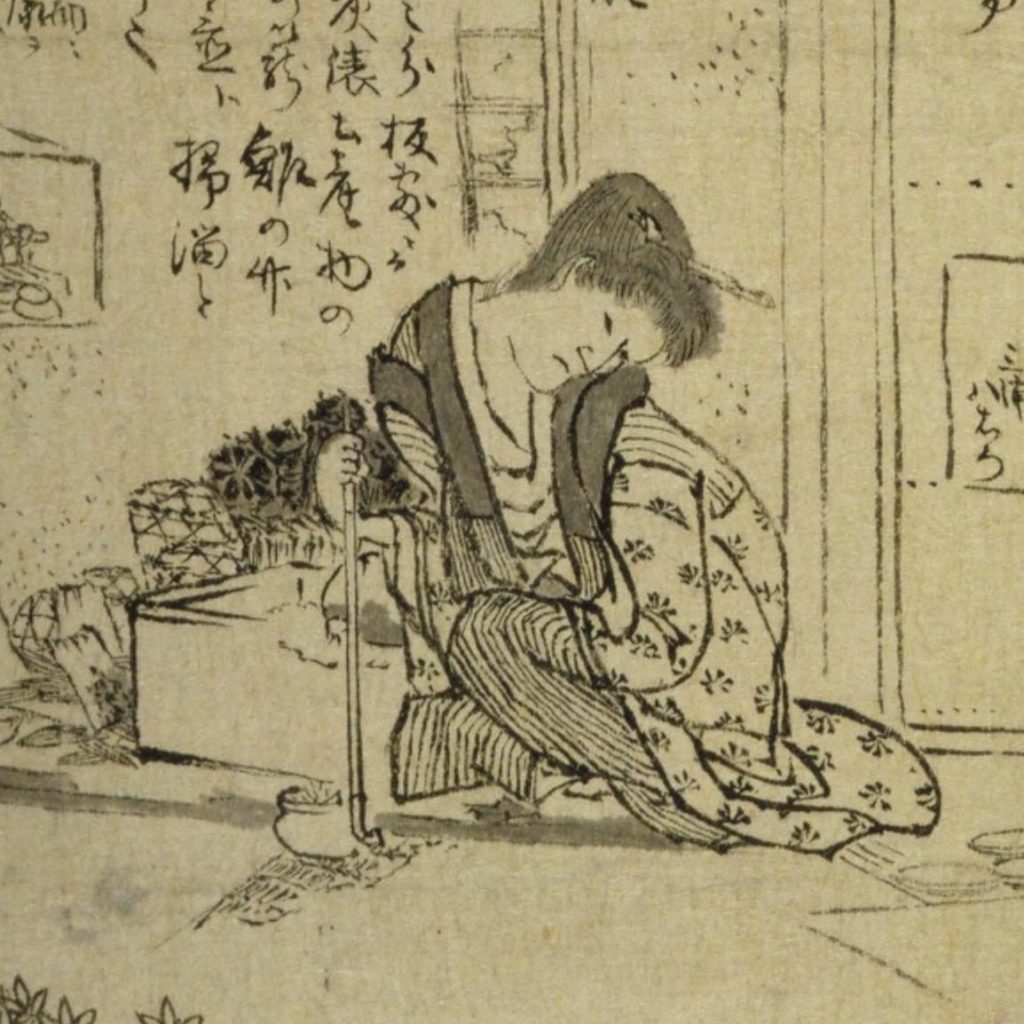
from National Diet Library